
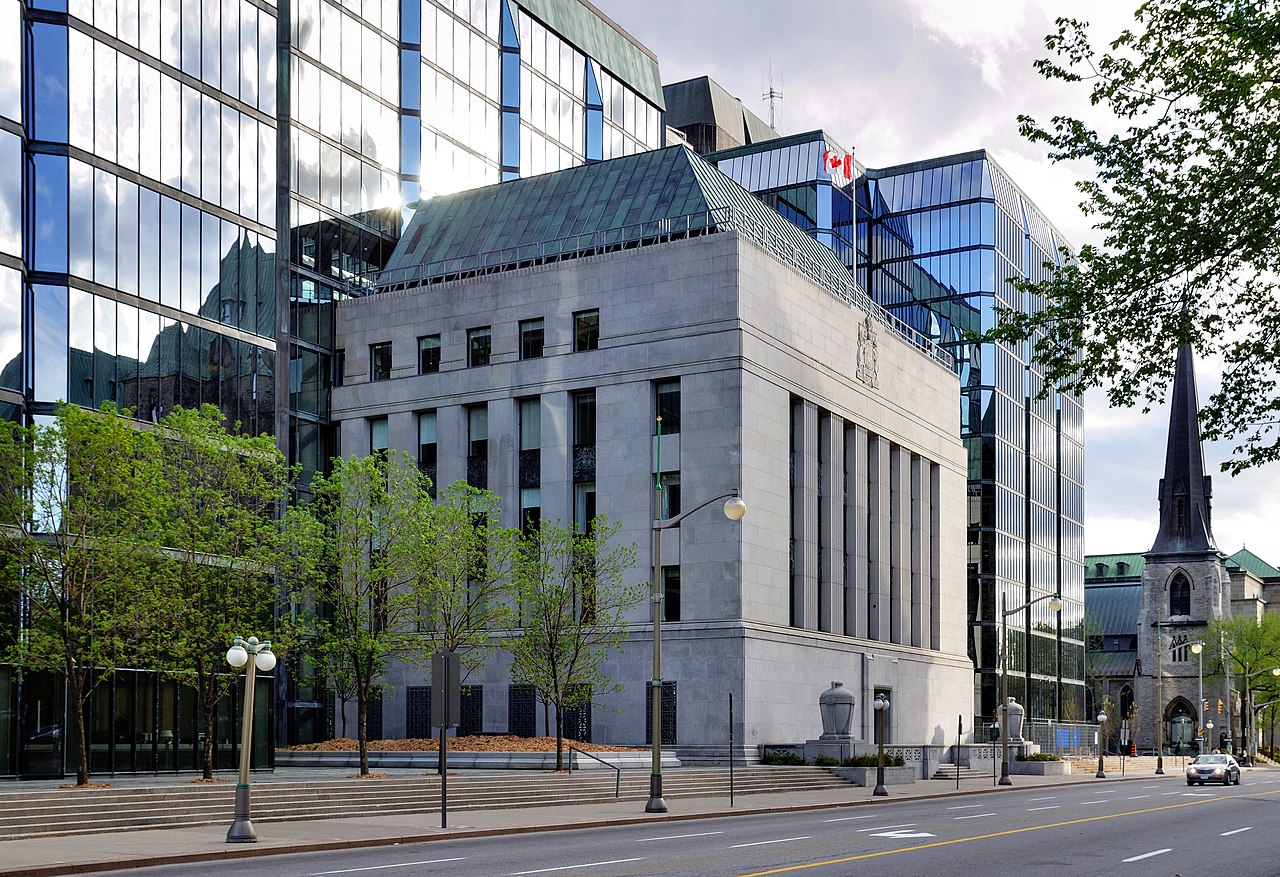
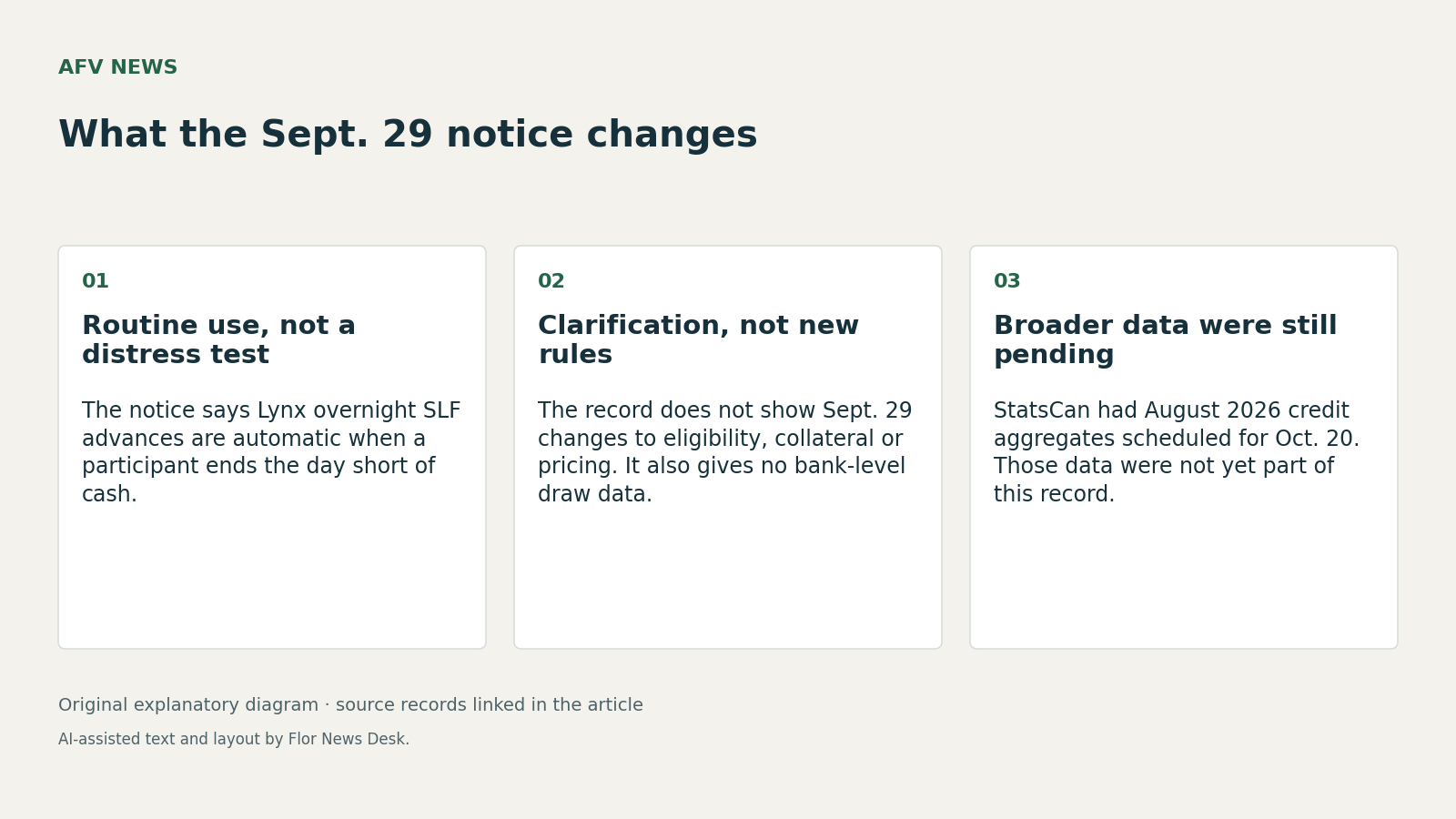
The Bank of Canada and the Office of the Superintendent of Financial Institutions used a Sept. 29, 2026 joint statement to redraw an important line in how markets should read overnight liquidity borrowing. The authorities said that when a Lynx participant ends the business day short of cash, an overnight advance from the Standing Liquidity Facility is automatic, non-discretionary and part of routine liquidity management, not evidence of stress. That is a clarification about interpretation, not a newly documented crisis or rescue program. Joint statement
That distinction matters because the facility sits inside the daily payment system rather than outside it. The Sept. 29 notice says the Standing Liquidity Facility provides secured liquidity to Lynx participants on an intraday and overnight basis. It does not say eligibility, collateral rules or operating rules changed on Sept. 29, 2026, and it gives no new figures on draw volumes, participant identities or follow-up by supervisors. Readers should therefore treat the notice as an operational clarification, not as proof that conditions improved or deteriorated. Joint statement
For bank analysts and corporate treasurers, the practical effect is interpretive. If an overnight advance is triggered automatically when a participant finishes the day short of cash, then the existence of a draw by itself says much less about that institution’s condition than an outsider might assume. That does not make the facility irrelevant. It means the public signal from routine overnight use is weaker than the signal from a discretionary emergency measure would be. That conclusion is analysis based on the mechanism the authorities described, not on any disclosed bank-by-bank usage data. Joint statement
The same-day context also points to market plumbing rather than a change in monetary-policy stance. The Bank of Canada’s news index lists Sept. 29, 2026 remarks by Deputy Governor Toni Gravelle at the Bloomberg Canadian Finance Conference in New York on repo-market resilience and the evolution of the Bank’s implementation framework. That supports reading the joint statement as part of a broader effort to explain short-term funding operations. But the index page is only a listing, not the speech text, so it cannot establish more detailed claims about the Standing Liquidity Facility on its own. Bank of Canada news index
Another boundary comes from the Bank’s press release index. In the fetched visible excerpt, the most recent listed press release is dated Sept. 10, 2026, and the excerpt also shows policy-rate releases from Sept. 2, July 15 and June 10, 2026. Because that page is only an index excerpt, it cannot prove where every Sept. 29 communication appeared. Still, it is a reminder not to confuse this notice with a rate announcement or a broad policy package. Press release index
What the public record still cannot show is as important as what it can. There is no sourced evidence here on whether overnight draws are rising, falling or concentrated; no evidence on pricing effects in repo or deposits; and no evidence on downstream borrowing conditions for businesses. As of Oct. 15, 2026, broader public data were still pending: Statistics Canada’s schedule, produced Oct. 9 and modified Oct. 14, listed Monthly credit aggregates for August 2026 for release on Oct. 20. Until records like that arrive, the Sept. 29 message is best understood as a narrowing of how to read routine Lynx borrowing, not as a measured verdict on Canadian funding conditions. Statistics Canada release schedule
Read our editorial standards or send a correction to the editorial desk.