
The value of Canadian building permits fell 17.3% in July to C$12.2 billion, with non-residential construction accounting for most of the decline.
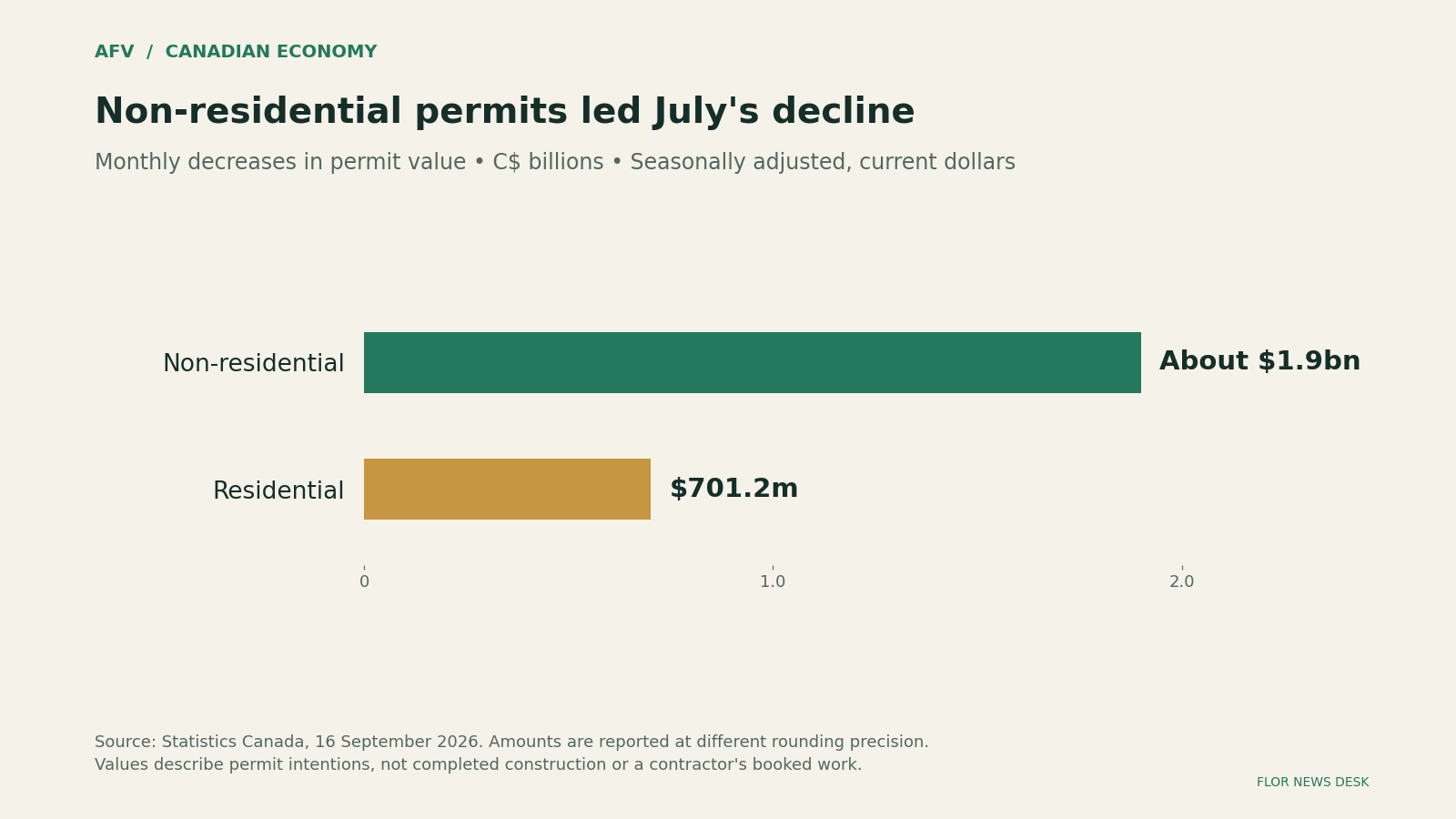
Statistics Canada's September 16 release reports a C$1.9 billion monthly decrease in non-residential permits and a C$701.2 million decline in residential permits. Institutional projects led the non-residential fall. July's total decrease more than reversed the C$2.3 billion increase recorded in June.
The headline series uses seasonally adjusted current-dollar values. In constant dollars, the total fell 17.5% from June. The direction was therefore similar after that price adjustment; the current-dollar change is not simply a count of fewer projects.
The work pipeline has several stages
A permit series describes construction intentions. For a contractor, that makes it useful background for the potential flow of future work, but it is different from an order book or a record of completed construction.
AFV's interpretation is that those stages should stay separate when a business reviews demand. A project can appear in a potential-opportunity list before the contractor has a signed agreement, an agreed start date or a schedule for deliveries. Moving an opportunity into a cash-flow plan requires evidence about that specific job.
Likewise, a national decline should not be applied mechanically to one firm's forecast. A company serving institutional projects in one city has a different exposure from a residential renovation contractor elsewhere. The broad total does not resolve the timing or location of its next contract.
Compare the right unit
Permit dollars, dwelling units and projects answer different questions. One building can contain many homes, and projects can differ greatly in value. Adding a dollar figure to a unit count would produce no useful measure.
The graphic accompanying this article compares only the reported dollar declines in residential and non-residential intentions. It uses rounded amounts and does not imply that every part of either sector contracted by the same percentage.
The July release also follows a strong June increase. Reading the two months together helps avoid treating one monthly movement as a settled long-term trajectory. A project-level review would still need the relevant municipality's record and the contractor's own confirmed work before supporting an operational decision.
No individual project cancellation, contractor revenue loss or completion delay is established by the aggregate permit figures alone.
Read our editorial standards or send a correction to the editorial desk.