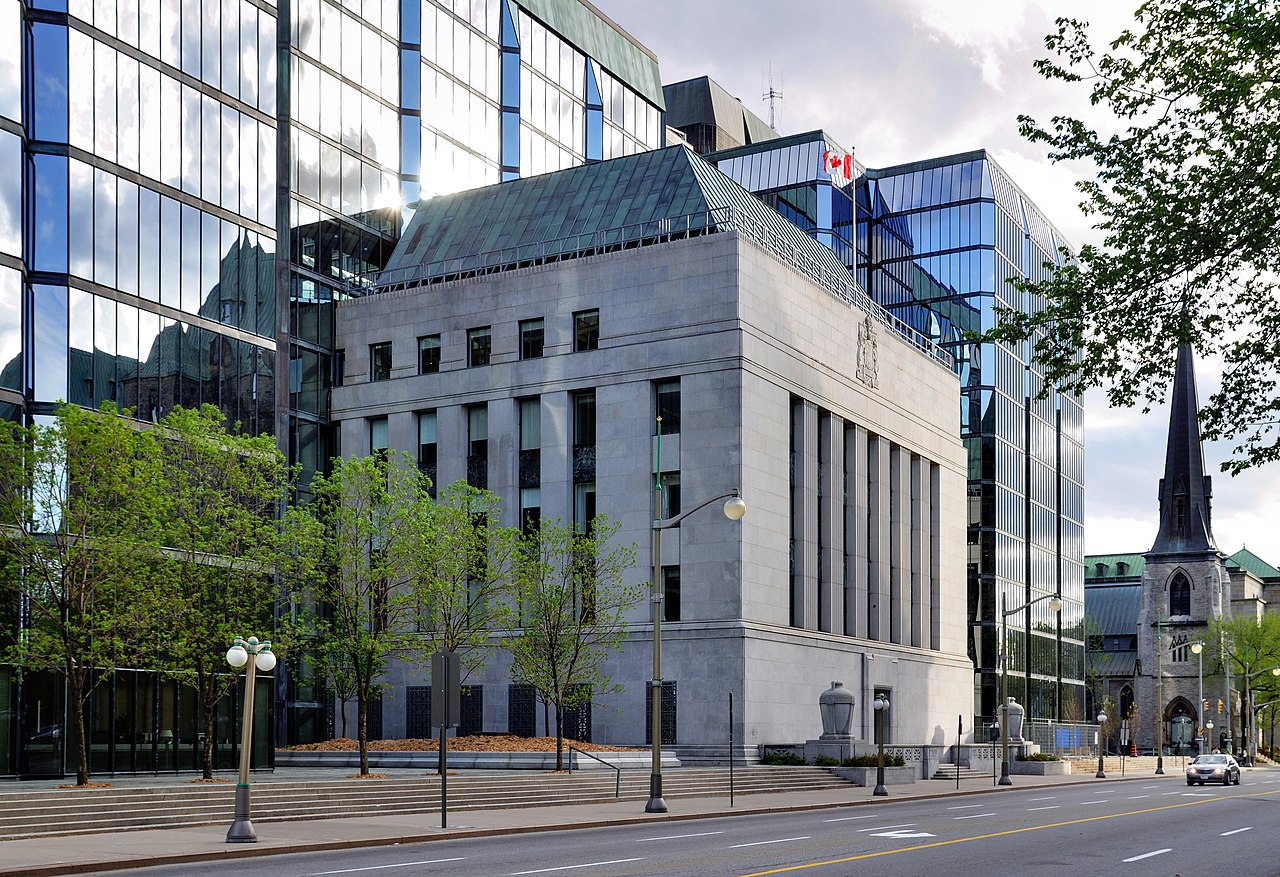
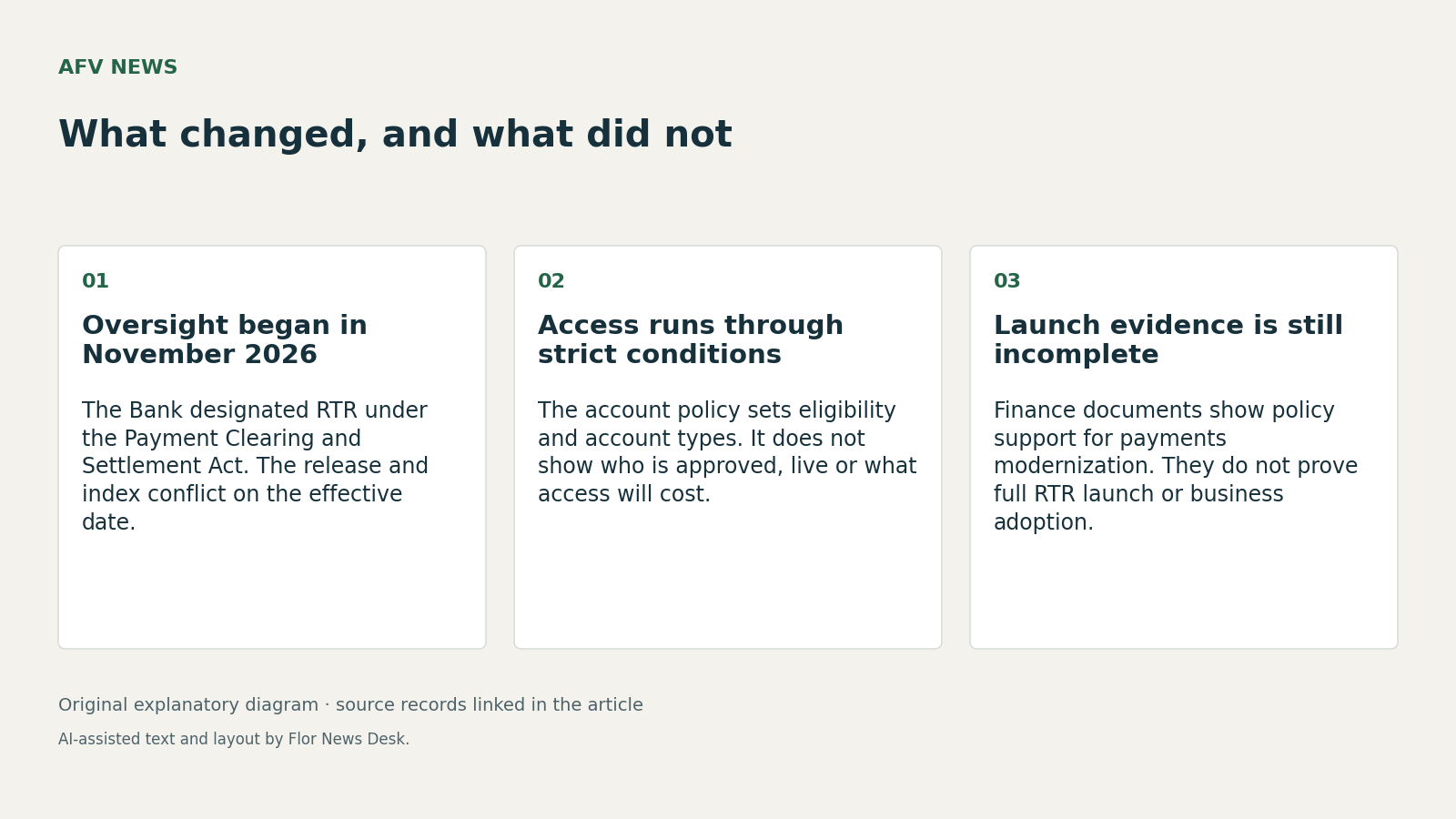
The Bank of Canada took a concrete step in Canada’s payments overhaul on November 9, 2026, when it said Governor Tiff Macklem had designated the Real-Time Rail, operated by Payments Canada, as a prominent payment system under the Payment Clearing and Settlement Act. The full release says the designation took effect on November 8, 2026, while the Bank’s regulatory-news index lists November 9, 2026, as the effective date. What is clear in both records is the substance: RTR is now under formal Bank oversight, and the Bank says designated domestic clearing and settlement systems also fall within its resolution regime. Bank release Regulatory news index
For businesses, the most important operational claim is not the designation label itself but what the Bank says RTR is built to do. According to the release, RTR will provide continuous clearing and settlement with immediate availability of funds, and it will clear and settle payments exchanged through Interac e-Transfer. Bank release If that operating model reaches business users at scale, it could change how finance teams think about receivables timing, refunds and cash positioning. But that outcome is still conditional. The public record provided here does not identify launch status, participants, volumes or adoption, so it does not yet prove a changed experience for most companies.
A second November 9 record matters because it shows how direct settlement access would be screened. The Bank’s RTR settlement-account access policy says applicants must qualify for Payments Canada membership under the Canadian Payments Act, or already be members, and must meet Payments Canada’s RTR participation requirements. It also says an applicant must be a federally or provincially regulated financial institution, a payment service provider supervised by the Bank under the Retail Payment Activities Act, or both. The policy creates unrestricted and restricted account types, and says RTR settlement accounts are funded and defunded through Lynx payments in the name of the RTR direct participant. A direct participant that is not a Lynx direct participant needs an arrangement with one before its RTR account becomes operational. RTR settlement account policy
That framework suggests a practical limit for non-financial businesses: a regulatory step has occurred, but direct connection is not shown to be broadly open. The policy describes how the Bank will assess applications; it does not identify approved account holders, pricing, approval timelines or live participation arrangements. RTR settlement account policy On that evidence, the near-term change is clearer for banks, payment service providers and treasury infrastructure providers than for ordinary corporate end users.
The wider federal policy record supports that narrower reading. Budget 2026 Chapter 1 says the government aims to strengthen competition across the economy, including the financial sector, to support access to capital, investment and innovation, but it does not mention RTR or establish an implementation milestone. Budget 2026 Chapter 1 The Department of Finance Canada’s 2026-27 Departmental Plan says the department will continue advancing payments modernization by supporting the launch of the Real-Time Rail fast payment system in 2026. Departmental Plan 2026-27 As of November 13, 2026, that is still a plan for 2026, not proof that launch has happened or that Canadian businesses are already using the system at scale.
The useful conclusion for AFV News readers is therefore specific. The Bank’s designation and access policy mark a real shift in governance, risk oversight and settlement architecture for RTR. They do not yet settle the commercial questions most businesses care about: who can participate directly, what intermediaries will charge, and when broad operational availability will be visible outside policy documents. Until public records answer those points, the evidence supports saying Canada’s instant-payments infrastructure has moved deeper into formal supervision, not that its full market rollout is already demonstrated.
Read our editorial standards or send a correction to the editorial desk.