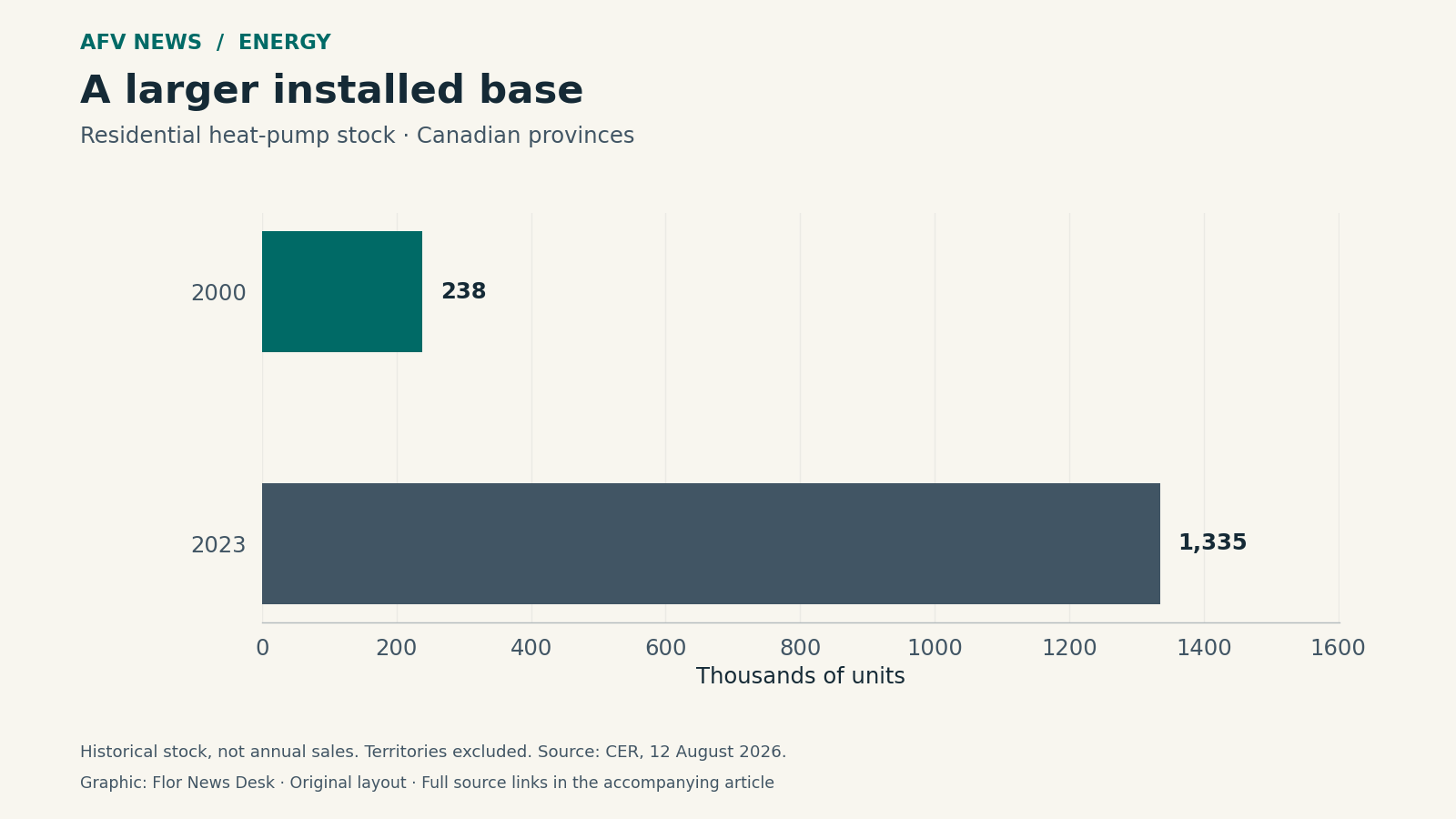
Canada’s stock of residential heat pumps reached about 1.335 million units in 2023, compared with 238,000 in 2000, according to an August 12 Canada Energy Regulator analysis. Its figures exclude the territories. Heat pumps accounted for 7.9% of residential heating systems in 2023, up from 1.9% in 2000. CER analysis
What the installed-stock figures measure
Those are installed-stock figures, not a count of orders placed this year. The distinction matters to a contractor assessing whether to expand installation crews, maintenance capacity or both.
The regulator also flags a revision to the underlying historical database. Its faster growth pattern should not be read as a sudden acceleration measured in 2026. The period being described still ends in 2023.
Heating, cooling and service demand
The technology combines functions that can matter to service planning. The International Energy Agency explains that heat pumps transfer heat from a source to where it is needed, and many systems can provide both heating and cooling. Its technical explanation describes how the equipment works; it does not establish the number of service visits required by Canadian households. IEA technical background, 2022
From national figures to a local market
For a local business, an installed base is only the beginning of a market estimate. A useful next step would distinguish equipment within its service territory, systems covered by another provider and customers who have actually requested work. Applying a national growth multiple directly to a local revenue forecast would omit those constraints.
An illustrative business record could separate new installations, scheduled maintenance, repairs and replacements. That would show whether growth in one activity was masking a shortfall in another. It would also keep a repeat customer’s maintenance visit from being counted as another newly installed system.
Equipment totals say nothing on their own about the margin on an individual job. Travel time, parts availability, the work required and the agreed price remain company-specific.
The larger historical stock establishes scale. Turning that scale into a local service plan requires a second set of evidence about customers, equipment and capacity.
Read our editorial standards or send a correction to the editorial desk.